








Costly Healthcare Mandates Need Greater Scrutiny

A new report highlights a trend that should concern employers, workers, and policymakers alike: Connecticut continues to add new health insurance benefit mandates, further hiking costs for struggling residents and employers.
Produced by the General Assembly’s Office of Legislative Research, the report notes that state lawmakers enacted or modified 18 mandated health insurance benefit categories between 2015 and 2025.
Connecticut now has 81 state-mandated health insurance benefits covering everything from breast cancer screenings and infertility treatments to hearing aids, mental health services, biomarker testing, and wheelchair repairs.
Many of these mandates address legitimate healthcare needs.
Coverage requirements for cancer screenings, mental health treatment, substance use disorder services, and other medically necessary care can improve access to treatment and, in many cases, produce better health outcomes.
The question policymakers must ask is whether they fully understand the cost implications of each new mandate and whether the benefits justify those costs.
Costly Impact
Every insurance mandate requires health plans to cover an additional service or treatment.
While a single mandate may appear modest in isolation, the cumulative impact of dozens of mandates can be substantial.
Those costs ultimately show up in higher premiums paid by employers, employees, and individuals purchasing coverage on their own.
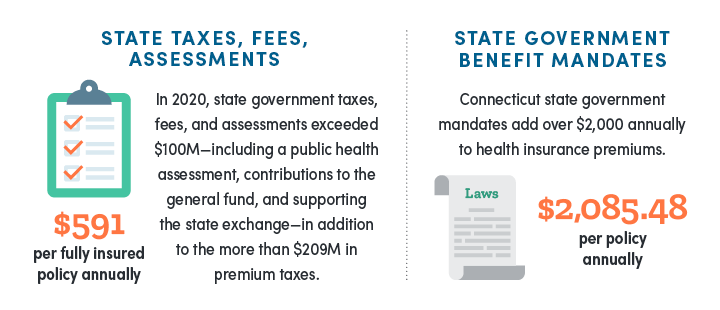
Connecticut has earned a national reputation as one of the most mandate-heavy states in the country, and policymakers from both parties have increasingly questioned whether the state should take a closer look at the financial impact of new requirements before approving them.
The OLR report demonstrates how rapidly the list has grown.
Since 2015 alone, lawmakers have enacted or expanded mandates covering autism services, hearing aids, diabetes supplies, preventive services, coronary calcium scans, biomarker testing, and many other benefits.
While each proposal often advances with broad support and compelling personal stories, there is rarely a comprehensive public discussion about how much the mandate will increase premiums for employers and families or whether a more targeted approach could achieve similar outcomes at a lower cost.
Mandate Reviews
CBIA has long supported more rigorous mandate reviews.
Similar to the fiscal notes legislators receive on proposals that affect state spending, policymakers should have access to an independent cost-benefit analysis before voting on new health insurance requirements.
Several lawmakers from both parties have supported this concept, arguing that legislators and consumers deserve transparency about the real-world cost of benefit mandates.
Some mandates, however, may actually reduce healthcare costs over time by helping patients receive the right treatment earlier, avoiding more expensive interventions later.
Legislators and consumers deserve transparency about the real-world cost of benefit mandates.
Connecticut’s recently enacted biomarker testing mandate is a good example.
While the mandate adds a new coverage requirement, it may ultimately save money for employers, health plans, and patients by reducing downstream medical costs and improving treatment effectiveness.
The challenge for policymakers is distinguishing between mandates that primarily add cost and those that may deliver measurable long-term value.
This distinction underscores why a thoughtful review process is needed.
Healthcare Affordability
Connecticut should not automatically reject new health insurance mandates, nor should it approve them without understanding their impact on affordability.
Policymakers should carefully evaluate each proposal, weigh the expected health benefits against the expected cost increases, and consider whether the mandate will improve outcomes in a cost-effective manner.
Healthcare affordability remains one of the top concerns for Connecticut employers.
Connecticut can support access to quality healthcare while also protecting affordability.
Recent CBIA surveys consistently show healthcare costs among the leading challenges facing businesses.
As premiums continue to rise, every additional requirement placed on health plans deserves careful examination.
Connecticut can support access to quality healthcare while also protecting affordability, but doing so requires transparency, data, and a willingness to evaluate both the benefits and the costs of every mandate.
RELATED
EXPLORE BY CATEGORY


Stay Connected with CBIA News Digests
The latest news and information delivered directly to your inbox.

CBIA IS FIGHTING TO MAKE CONNECTICUT A TOP STATE FOR BUSINESS, JOBS, AND ECONOMIC GROWTH. A BETTER BUSINESS CLIMATE MEANS A BRIGHTER FUTURE FOR EVERYONE.