








State Supreme Court: Security Screenings Count as ‘Hours Worked’
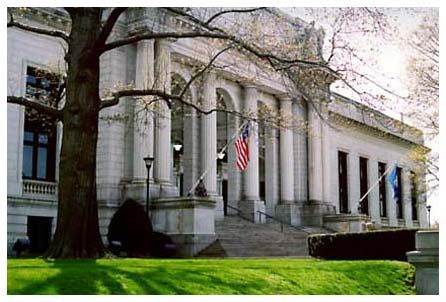
The Connecticut Supreme Court ruled Feb. 5 that employees must be compensated for time spent waiting for and undergoing security screenings.
In an unanimous decision, the seven-member panel overturned a 2023 U.S. District Court ruling that security checks were not part of the workers’ core job duties.
That decision was appealed to the U.S. Court of Appeals for the Second Circuit, which asked the state Supreme Court to clarify two questions regarding Connecticut wage and hour law.
The Supreme Court was asked whether state law required that employees be compensated for time spent going through mandatory security screenings at their place of employment.
In addition, if justices determined employees were entitled to compensation, they were asked to then decide whether a de minimis exception applied and what amount of time was considered de minimis.
The case, Del Rio v. Amazon.com Services, Inc., was brought by former Amazon employees in 2021.
Ruling
The suit sought straight time and overtime “at twice the full amount” of such wages, as well as costs and attorney’s fees.
In its decision, the Supreme Court noted that no legal exception existed for the withholding of pay for time spent on minimal matters at the end of an employee’s shift.
The decision also determined that “Connecticut’s wage laws do not incorporate a de minimis exception to compensability.”
“Under Connecticut law, an employer must compensate its employers for all ‘hours worked,’ and the plain and unambiguous language of the statute (§31-76b (2) (A)) defining that phrase requires an employer to compensate its employees for any period of time during which the employer requires its employee to be on its premises, even if the employee is not required to work during that time period,” the justices wrote.
“Because it was undisputed that the defendants required the plaintiffs to undergo mandatory security screenings on the defendants’ premises before the plaintiffs were permitted to leave those premises at the end of their shifts, that time was compensable.”
The decision also determined that “Connecticut’s wage laws do not incorporate, either by statute, regulation, or judicial precedent, a de minimis exception to compensability that would allow an employer, in recording an employee’s time at work, to disregard insubstantial or insignificant periods of time beyond an employee’s scheduled working hours when those periods of time cannot, as a practical administrative matter, be precisely recorded for payroll purposes.”
RELATED
EXPLORE BY CATEGORY


Stay Connected with CBIA News Digests
The latest news and information delivered directly to your inbox.

CBIA IS FIGHTING TO MAKE CONNECTICUT A TOP STATE FOR BUSINESS, JOBS, AND ECONOMIC GROWTH. A BETTER BUSINESS CLIMATE MEANS A BRIGHTER FUTURE FOR EVERYONE.