







White House Moves to Preempt State AI Laws
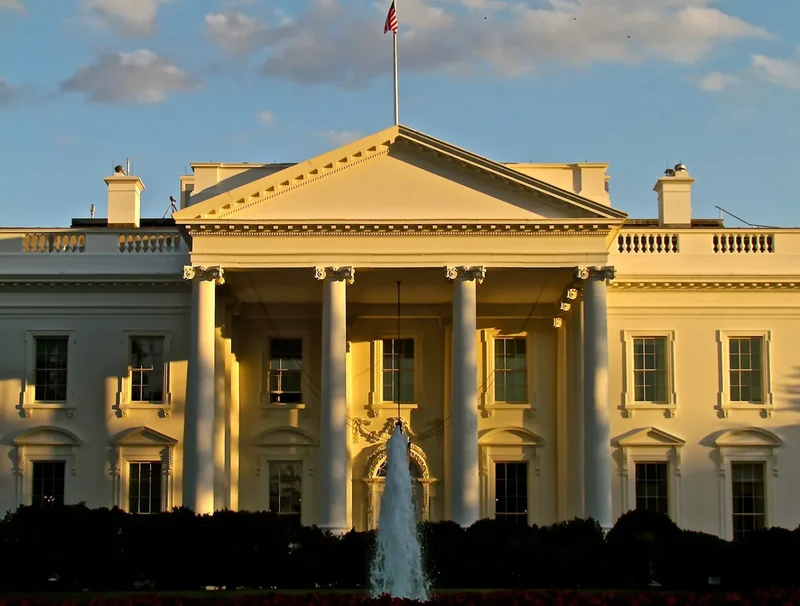
An executive order signed by President Donald Trump Dec. 11 marks a significant shift in U.S. artificial intelligence policy, with implications for Connecticut’s efforts to regulate AI use by businesses.
The order targets the replacement of a growing patchwork of state-level regulations with a unified federal approach aimed at sustaining American leadership in artificial intelligence.
The administration argues that state-by-state AI rules create compliance challenges, particularly for small businesses, and risk undermining U.S. competitiveness in the global AI race.
State laws—such as Colorado’s 2024 comprehensive legislation—often impose requirements like algorithmic bias mitigation and disclosure mandates, which federal officials say could force AI models to alter truthful outputs and impede innovation.
Key Provisions
- AI Litigation Task Force: The U.S. Department of Justice will establish a dedicated task force within 30 days to challenge state AI laws deemed unconstitutional or inconsistent with federal policy.
- Commerce Department Review: Within 90 days, the Secretary of Commerce must publish an evaluation identifying “onerous” state AI laws, focusing on those that compel model alterations or raise First Amendment concerns.
- Funding Conditions: States enforcing conflicting AI laws may lose eligibility for remaining Broadband Equity, Access, and Deployment funds. Agencies will also consider conditioning discretionary grants on compliance.
- Federal Standards: The FCC is directed to explore a federal reporting and disclosure standard for AI models that would preempt conflicting state requirements. The FTC will issue guidance clarifying when state mandates violate federal consumer protection laws.
- Legislative Proposal: The administration will prepare recommendations for a uniform federal AI framework, while preserving state authority over child safety, infrastructure, and procurement.
Impact on Connecticut
Connecticut lawmakers have debated comprehensive AI regulation during the past two legislative sessions, with proposals requiring risk management programs and impact assessments for high-risk systems.
It remains unclear how the executive order will affect these efforts until federal agencies complete their reviews and courts weigh in on anticipated preemption challenges.
“A national framework will allow Connecticut businesses to compete on a level playing field.”
CBIA’s Chris Davis
Businesses should continue monitoring developments and prepare for evolving compliance obligations over the next few months.
“Broad, comprehensive state-specific regulations on the use of AI by businesses could have a chilling effect on innovation, entrepreneurship, and investment in Connecticut-based employers,” said CBIA’s Chris Davis.
“A national framework will allow Connecticut businesses to compete on a level playing field rather than being hampered by potential Connecticut-specific regulations that will undoubtedly slow innovation, inhibit growth, and cause investors to flee to other states.”
Looking Ahead
While the order signals aggressive federal action in the weeks ahead, it does not immediately invalidate state laws. It is anticipated that any restrictions on funding will be challenged by attorneys general from around the country.
“Attorneys general are united in staunch opposition to any effort to restrain states’ abilities to pass commonsense AI regulations to fill the vacuum left by federal inaction,” said Connecticut Attorney General William Tong.
Despite the executive order, it’s anticipated that Connecticut lawmakers will again attempt to pass legislation regulating AI in the upcoming 2026 legislative session.
“With the gridlock in DC, states have been the only ones to act to defend their residents from harms of social media, and this executive order would prevent states from acting to defend their residents from potential harms of AI,” said state Sen. James Maroney (D-Milford), the leading proponent for regulation in Connecticut.
Despite the executive order, it’s anticipated that Connecticut lawmakers will again attempt to pass legislation regulating AI.
“We will not harness the full potential of this technology until the majority of people feel safe in using it, and this order is a major step in the wrong direction.”
Existing nondiscrimination laws in Connecticut, however, already cover many of the concerns raised by proponents of state-specific legislation.
Additionally, the order still allows for state-specific protections for minors and state-level rules around state government use and procurement of AI.
As we look ahead to the upcoming Connecticut legislative session, CBIA’s new Technology Policy Council will keep members abreast of any developments impacting businesses and their use of AI to create efficiencies that improve productivity, increase tax revenue, and grow our economy.
For more information, contact CBIA’s CBIA’s Chris Davis (860.244.1931).
RELATED
EXPLORE BY CATEGORY


Stay Connected with CBIA News Digests
The latest news and information delivered directly to your inbox.

CBIA IS FIGHTING TO MAKE CONNECTICUT A TOP STATE FOR BUSINESS, JOBS, AND ECONOMIC GROWTH. A BETTER BUSINESS CLIMATE MEANS A BRIGHTER FUTURE FOR EVERYONE.